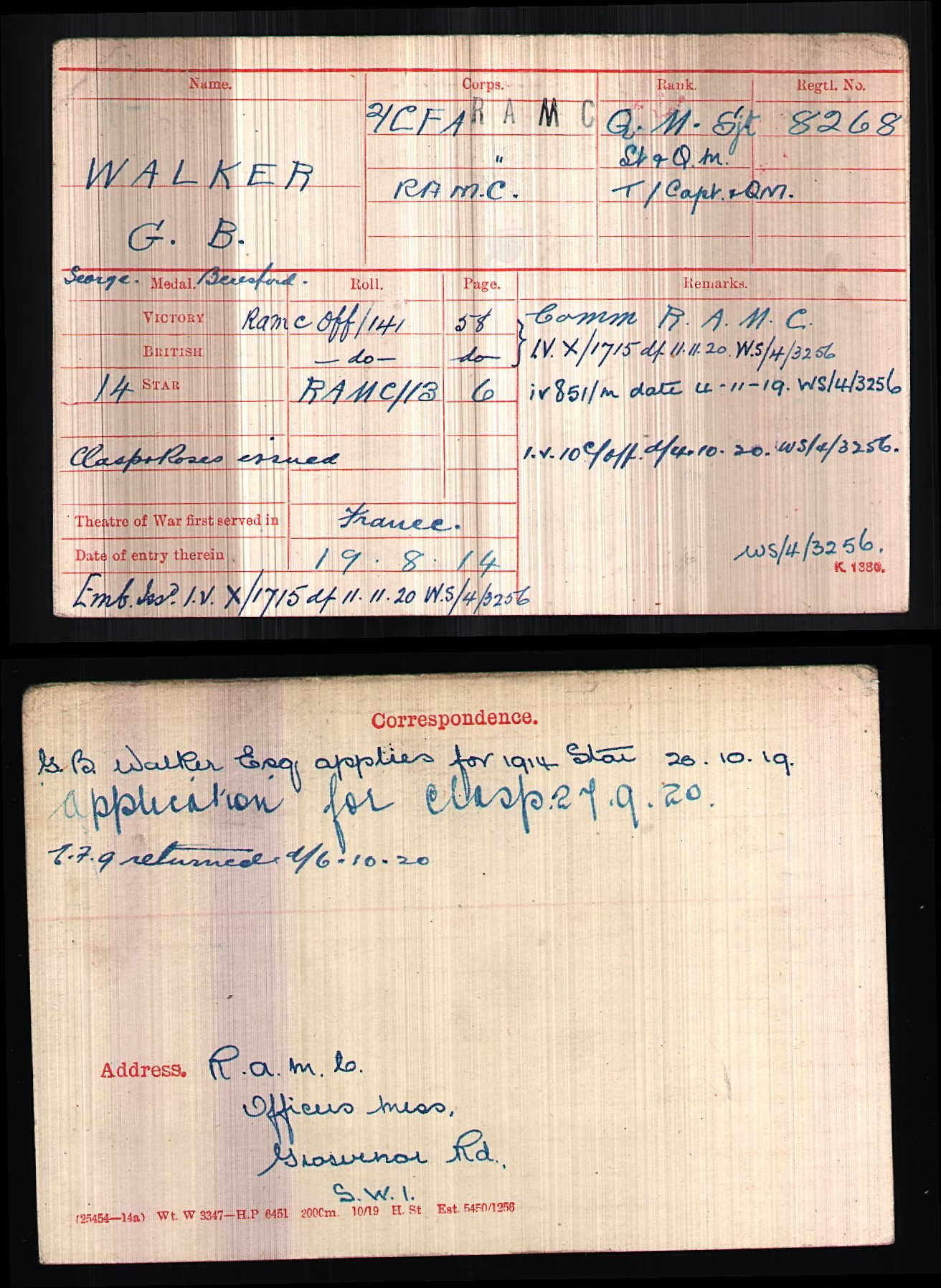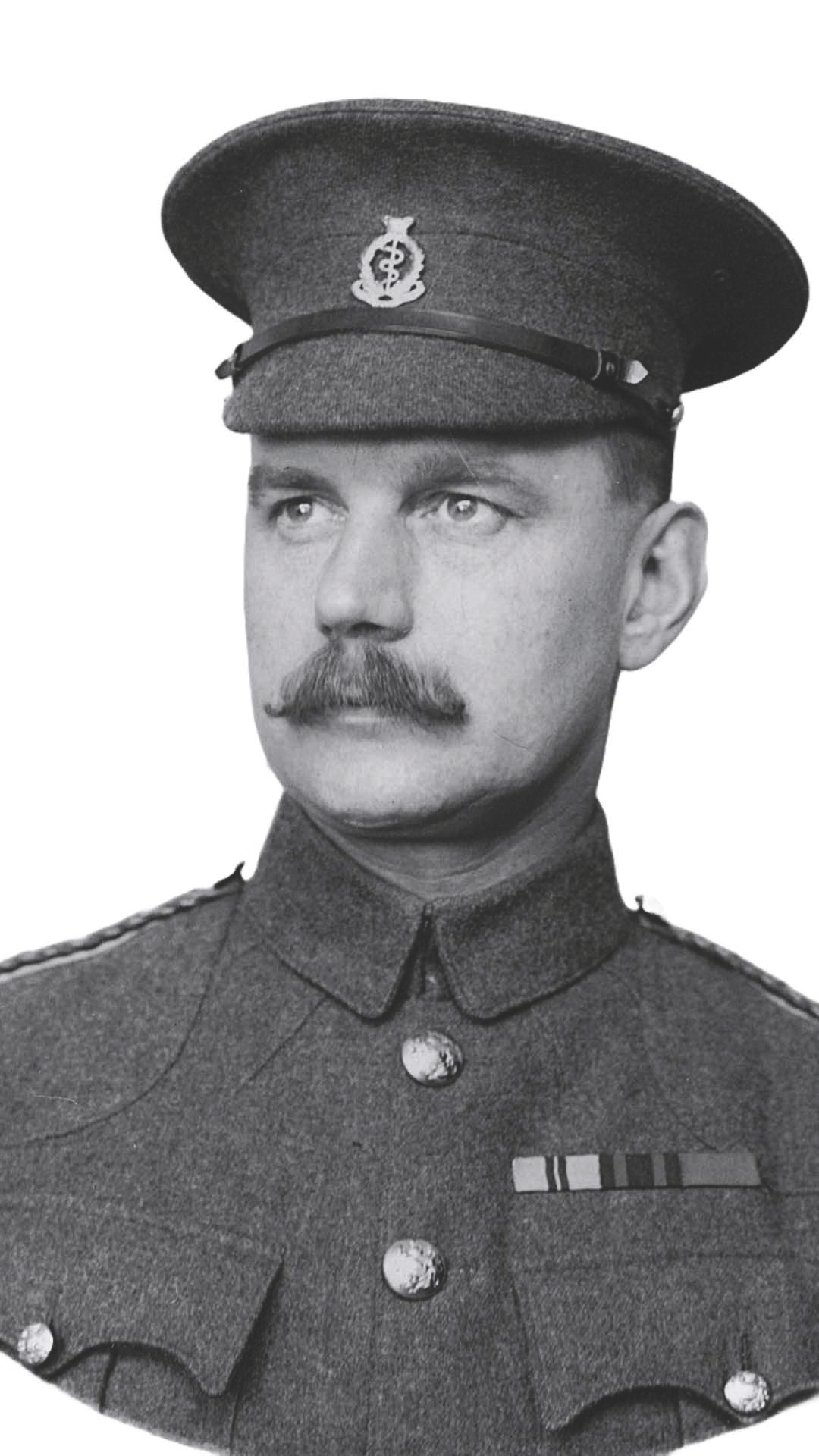

Captain George WALKER, M.C, M.B.E, M.S.M
4th Middlesex Regiment
No. 8268 Royal Army Medical Corps
British Expeditionary Force (BEF)
27 years British Army service (1889 – 1916)
George Berrisford WALKER was born in 1871, at Old Brompton, Kensington, England.
On January 19, 1889, he enlisted with the Medical Staff Corps (MSC).
In 1896, the MSC became the Royal Army Medical Corps (RAMC)*, which was a non-fighting unit. The RAMC unit was immediately sent to fight in the Sudan until 1898.
From 1896 to 1900, he served in the 2nd South African War (Boer). He was mentioned in despatches for his service during the Siege of Ladysmith (Defence) and was decorated with the British Military Cross (MC). He was promoted to Sergeant in 1899.
From 1900 to 1905, he served in France, then Hong Kong until 1908.
From 1914 to 1916, WALKER served in WW1 with the BEF in France where he achieved the following:
· October 12, 1914, field promotion to Sergeant Major.
· December 12, 1914, mentioned in despatches.
· June 22, 1915, awarded a second Military Cross.
· 1916 - Commissioned to Warrant officer.
George WALKER died on November 6, 1937***
The RAMC demonstrated the importance of army medical provisions and the fatal consequences of ignoring advice on hygiene. It remained at the forefront of new medical techniques throughout the 20th century. The RAMC was involved in pioneering facial reconstruction surgery in the First World War, and the use of penicillin and blood transfusions in the Second World War (1939-45).
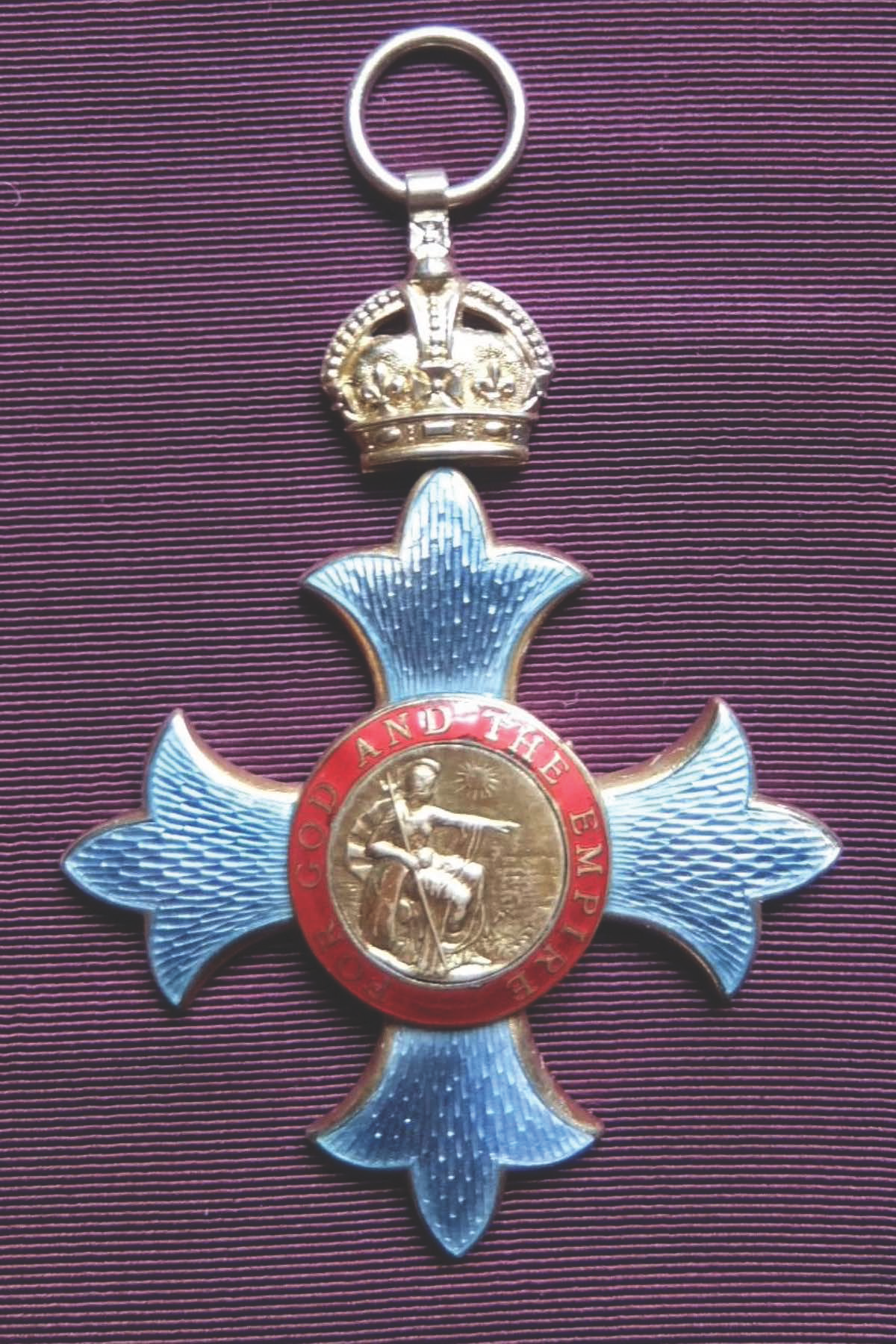
Member of the Order of the British Empire (M.B.E)
Recognizes significant, long-term contributions to the community, arts, sciences, or public service; it's part of the prestigious Order of the British Empire, with the "Member" being the third rank (after CBE and OBE). Recipients are honored for outstanding achievement and service that has a real, sustained impact and serves as an example to others.
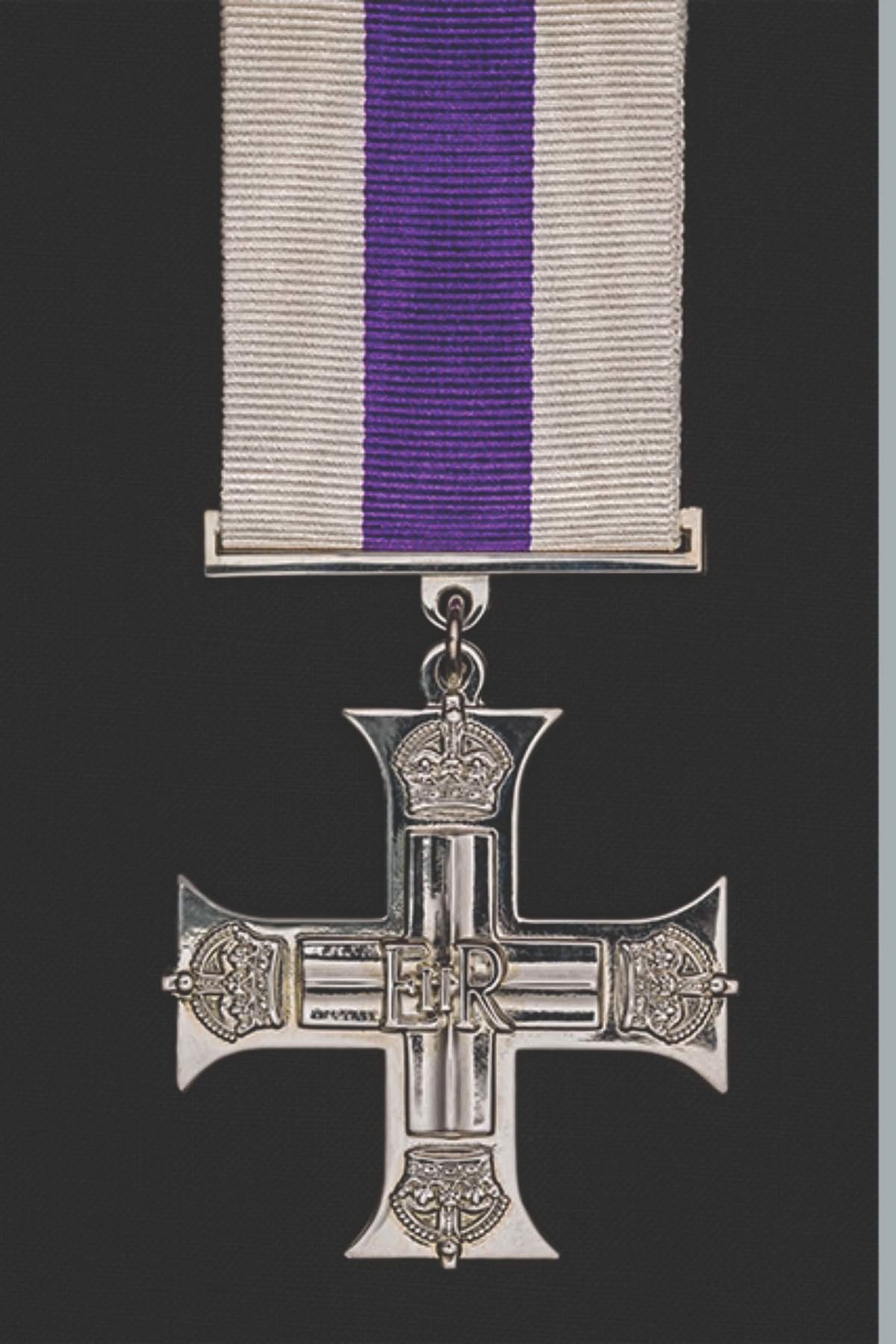
Military Cross (M.C) with Bar
Awarded for an act or acts of exemplary gallantry during active operations against the enemy on land, to captains or officers of lower rank up to warrant officers.
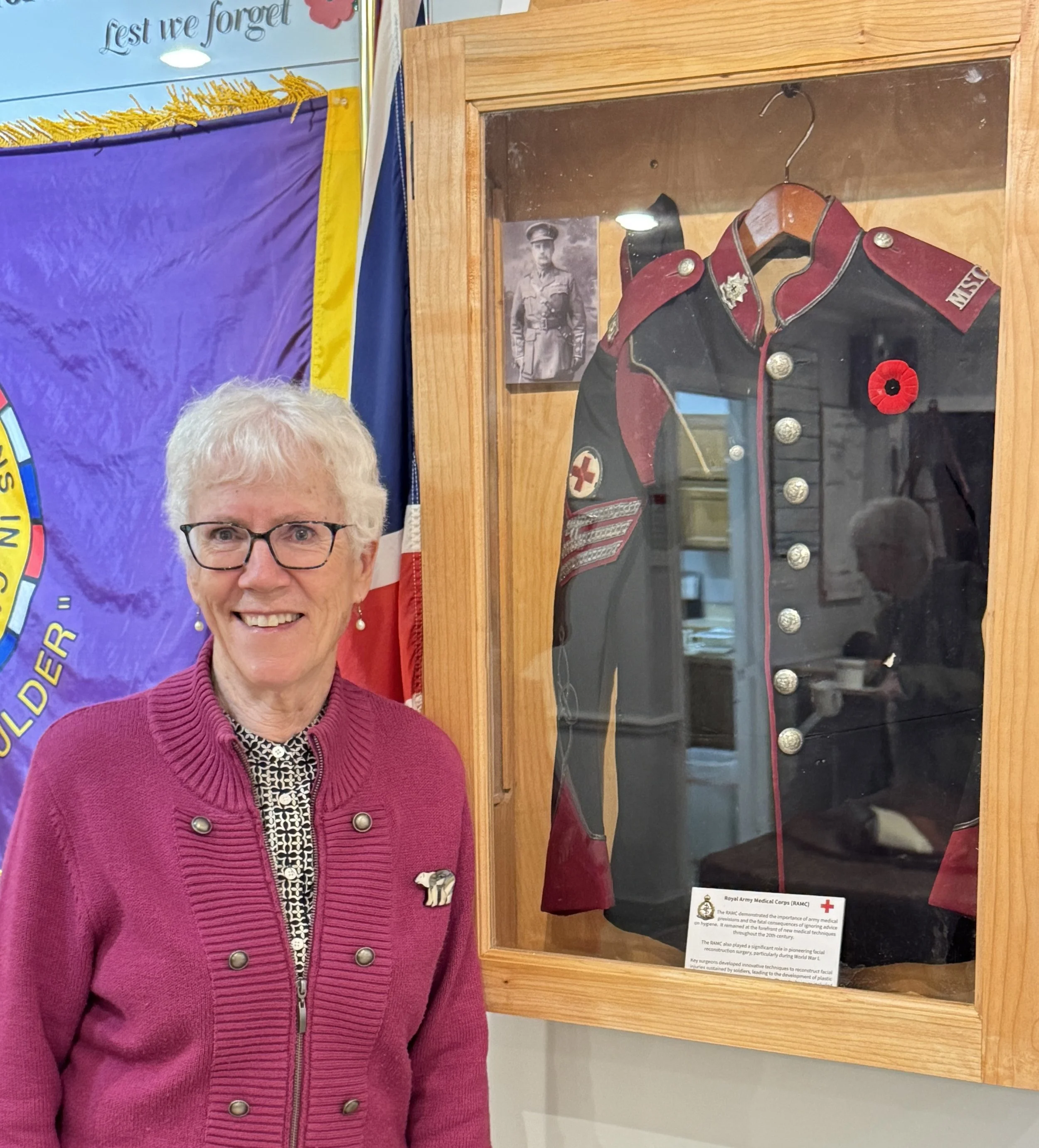
Nancy McRae (Walker), great-grand-daughter of George.
Nancy donated George’s uniform to the Unit. She had no knowledge of George’s military history.
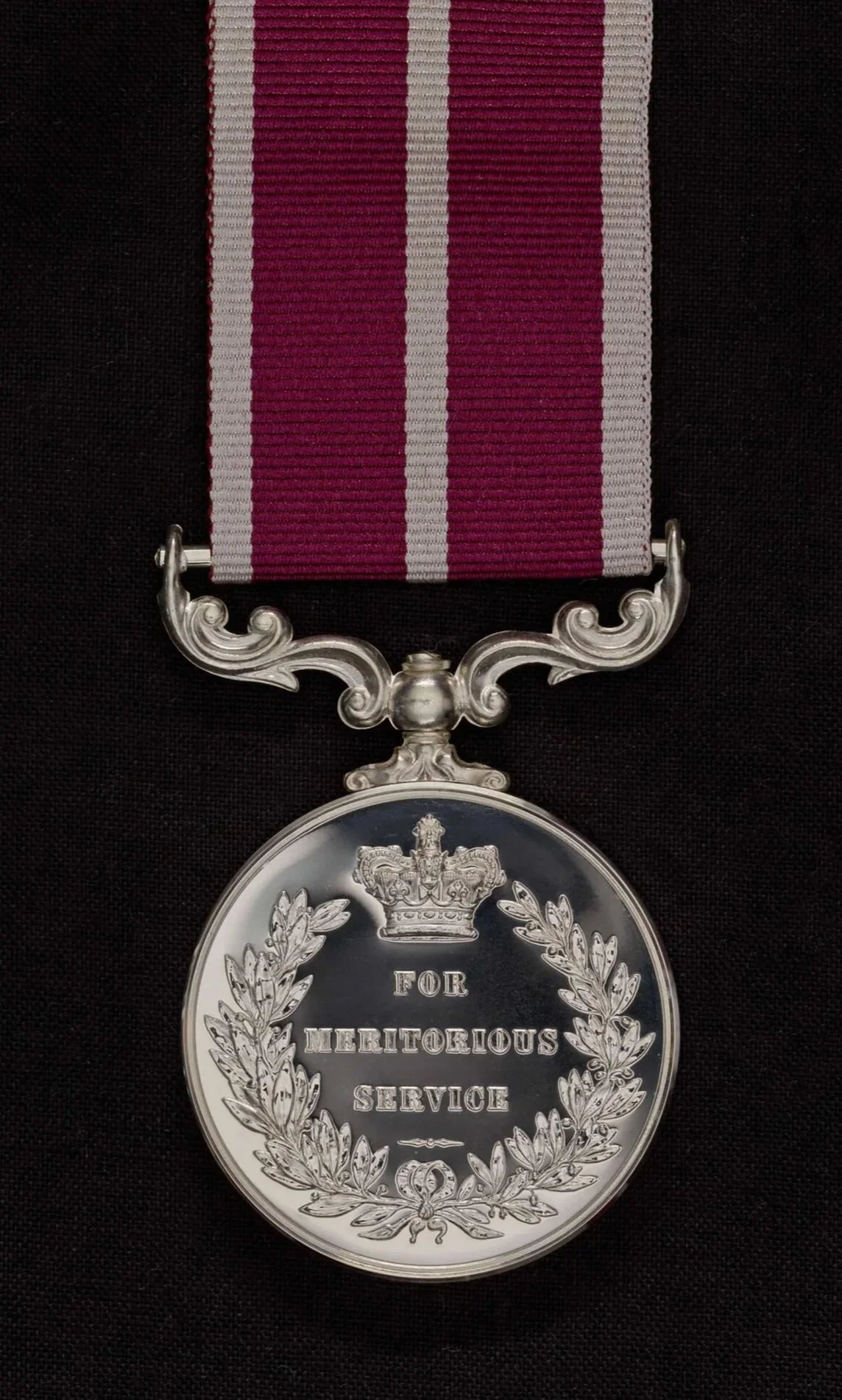
British Meritorious Service Medal (M.S.M)
Awarded to Warrant Officers and senior NCOs (Sergeant and above) in the British Armed Forces, for long, valuable, and irreproachable service, often requiring prior award of the Long Service and Good Conduct Medal, though historically also for gallantry or duty in a theater of war.
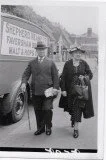
George and hi wife Ada Walker