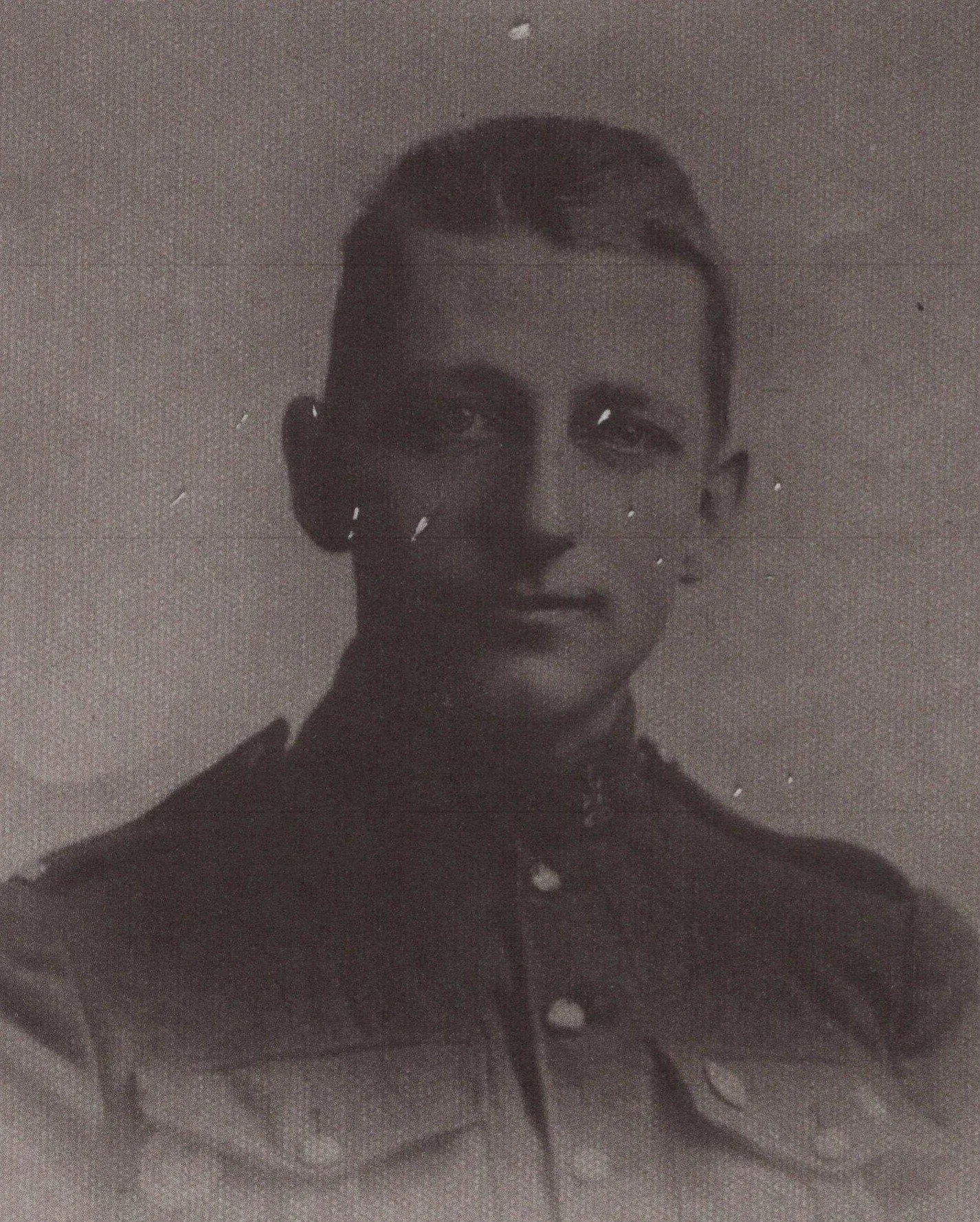

Mack Carson HUNTER was born on December 9, 1890, at South Hampton, Nova Scotia. He is the grand-father of Matsqui 315 member, Carol Wickey Taylor
On February 4, 1915, he enlisted in the 53rd Battalion (North Saskatchewan) and later served with the 28th Canadian (Northwest) Battalion. He fought on the battle fields of France,
On September 15, 1916, during a battle at the Somme (Battle of Courcelette), France, he was shot in the arm with an ‘expanding’ bullet (see below)). The injury resulted in a permanent disability. He was deemed unfit for service and discharged from the military.
Mack HUNTER died on July 4, 1961.
Expanding Bullets
Expanding bullets, such as exploding or ‘dum dums’, were designed to expand upon impact, causing larger wounds and more tissue damage than traditional bullets. These types of ammunition was controversial due to their devastating effects on the human body.
In 1899, the Hague Declaration prohibited the use of projectiles that expand or flatten easily in the body, deeming them inhumane.
Although they were not widely used by all combatants, in WW1, some nations did employ them, leading to significant injuries that often complicated medical treatment. The ethical implications of using such bullets prompted international discussions about their regulation.
The broader context of World War I, with its high casualty rates and advancements in medical care, made the debate over expanding bullets especially relevant. After WW1, the use of expanding bullets was largely condemned and prohibited under various international agreements, reflecting a commitment to more humane warfare practices.
Dum dum bullets, known for their soft-nosed or hollow-point design, were developed in the late 19th century and used in World War I. These bullets expanded upon impact, causing more severe wounds than traditional full metal jacket bullets. The use of such ammunition was controversial, leading to international outrage and calls for regulation under the Hague Conventions. By the end of the war, many nations had moved away from using them, considering their effects inhumane.
Private Mack HUNTER
No. 440498
53rd Battalion (North Saskatchewan)
28th Canadian (Northwest) Battalion.